

It seems that I have ben away from the blogosphere for a while but I am back with thoughts about flowers, with different reproductive strategies. We think of flowers in so many different ways but in fact, to the plant they are a means to an end. That end being the continuation of their species.


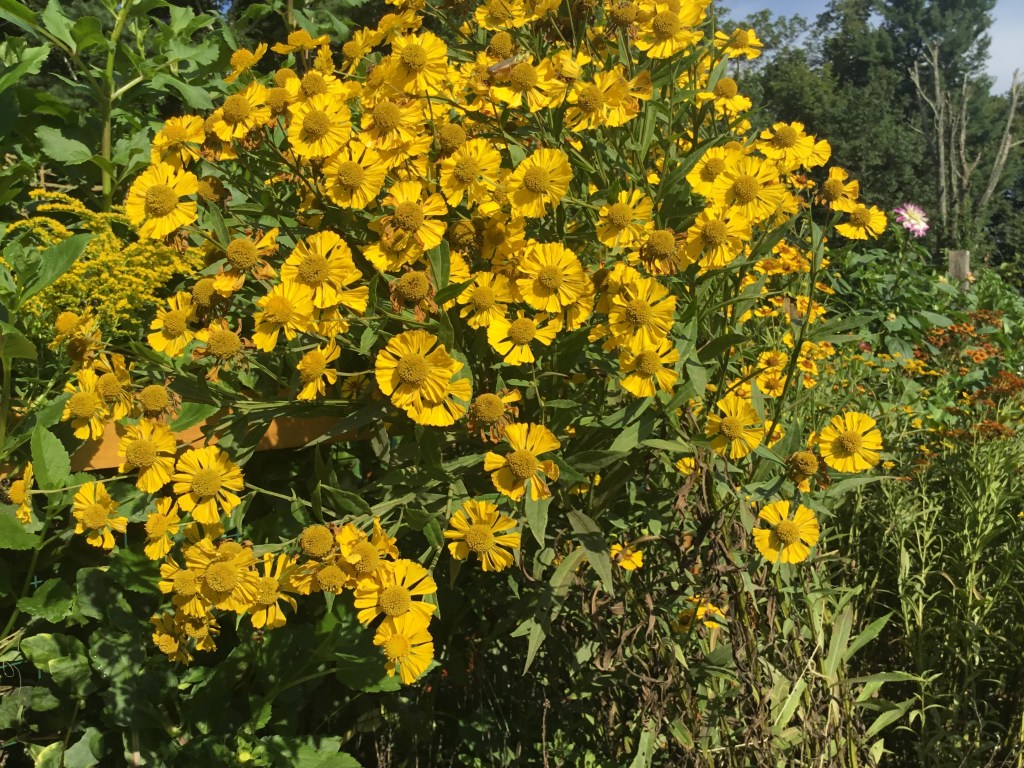
As I ventured out into the gardens this morning I found myself sharing space with the birds and bees. More specifically, hummingbirds and a multitude of bumblebees, solitary bees and honeybees. A pair of hummingbirds decided that they preferred the red salvia flowers to the sugar water in our feeder this morning, although I am sure that later on they will conduct their aerial combat above the feeder as they do every day. The yellow and orange helenium flowers must have a powerful attraction to the bees, either with an abundance of nectar or pollen or maybe both. Whether it’s birds or bees though, the advantage to the flowering plants is to have their pollen transferred from one plant to another, ensuring the production of seeds and the continuation of their species.


There were no birds or bees swarming our grasses today, or any other day for that matter. They employ a different reproductive strategy than the flowers with colorful flowers and sweet nectar. Wind is their means of transferring their pollen from plant to plant. This is sometimes an inconvenient process such as when the white pines in our yard release missive amounts of yellow pollen, covering everything in a awful goo. When oaks, birches, grasses and ragweed release their pollen there are many people who suffer with “hay fever”. But this method does get the job done even though it requires a huge outlay of energy in producing enough pollen for a successful transfer.


Corn is another plant in the grass family. The tassels at the top of the plant are the male flower and release pollen as they did this morning all over me while I was trying to take their picture. The silk on the immature ears are part of the female flower of the corn. Every kernel on a cob of corn must first have a single pollen grain make contact with a single strand of silk. To get ears that are fully filled out with corn kernels, it is best to plant corn in blocks rather that in single, stand alone rows, so that the pollen will have the best chance of contacting the silk fully. In my raised beds I have blocks of four plants wide by six plants long. This seems to work pretty well. I plant in succession to keep production going throughout the summer. The last planting was only three feet high when high winds came through and flattened them. As you can see in the picture on the right, they have recovered on their own and hopefully will produce one more crop for our table this fall.
 New Hampshire Gardening
Good to see your posts again. Everything in your garden looks so lush!